

Blog
Yalda Night Poetry: Hafez, Fal-e Hafez and the Persian Tradition of Poetry

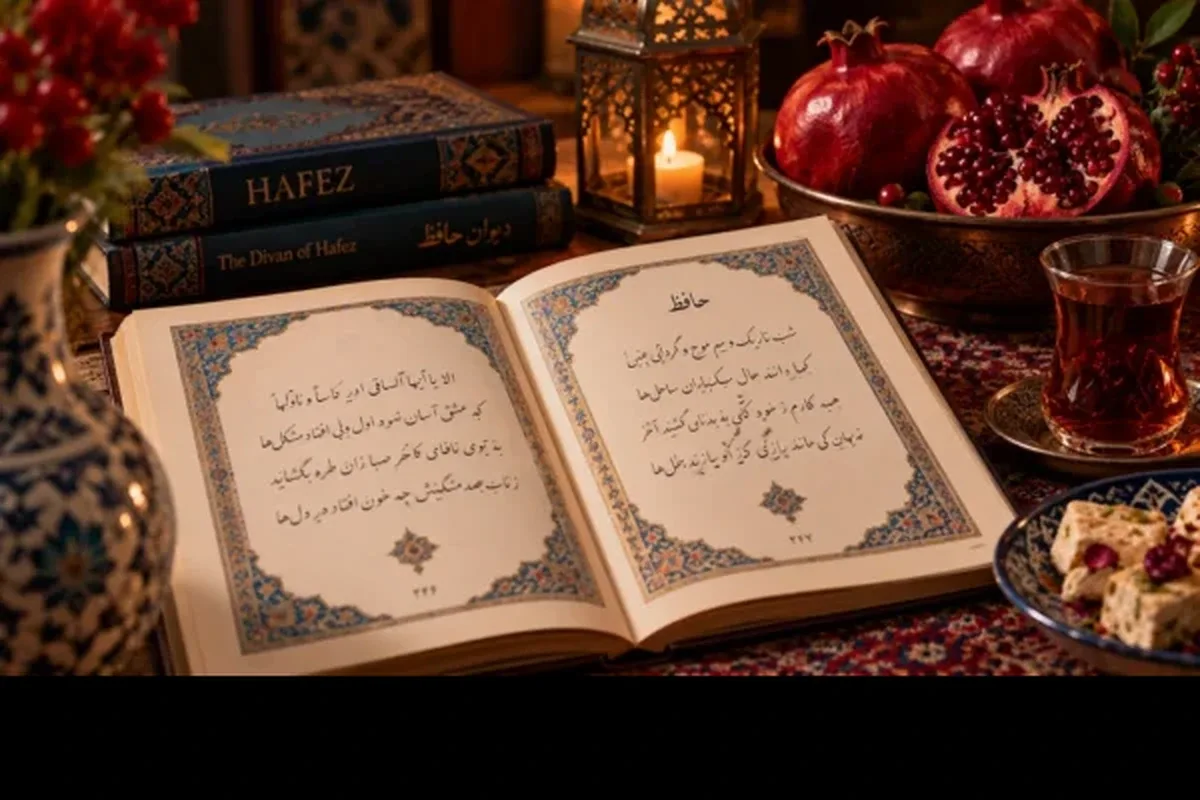
For many Persian families, Yalda Night is not complete without poetry. Once the food has been shared and the tea has been poured, attention often turns towards a book of poetry, particularly the Divan of Hafez, and the atmosphere of the evening changes from eating and conversation to listening, interpretation and reflection.
This tradition gives Yalda another dimension. The celebration is associated with the longest night of the year and the gradual return of light, but it is also a time when families reconnect with stories, literature and memories that have been passed from one generation to another. Poetry provides a way of doing that without turning the evening into a formal cultural lesson.
UNESCO’s description of Yaldā/Chella, which was inscribed on the Representative List of the Intangible Cultural Heritage of Humanity in 2022, specifically identifies poetry recitation and storytelling among the activities associated with the celebration. You can read the full UNESCO description of Yaldā/Chella for a broader understanding of the tradition.
For Persian families, therefore, Yalda Night poetry is not simply entertainment. It is part of the cultural atmosphere of the evening.
Table of Contents
Who Was Hafez?
When discussing Persian poetry and Yalda, one name appears again and again: Hafez of Shiraz.
Hafez, whose full name was Shams-al-Din Mohammad, lived in Shiraz around the fourteenth century and is regarded as one of the most celebrated Persian lyric poets. His poetry, particularly his ghazals, has remained deeply influential in Persian literary and cultural life.
The Encyclopaedia Iranica article on Hafez notes that the Divan of Hafez is commonly found in Persian homes and that many of his lines have become familiar sayings. His poetry has therefore existed not only as literature to be studied but as something integrated into everyday cultural life.
That helps explain why Hafez is such a natural presence at Yalda. His poems can be read, discussed and interpreted by several generations sitting around the same table.
A grandparent may know a verse by heart, a parent may remember hearing it during childhood Yalda celebrations, and a younger family member may encounter the poem for the first time. The same text can therefore connect people who grew up in very different circumstances.
What Is the Divan of Hafez?
The Divan of Hafez is the collection of poems traditionally attributed to Hafez. It contains hundreds of ghazals, along with other poetic forms, and has become one of the most recognisable works of Persian literature.
Hafez’s poetry frequently explores themes such as love, longing, spirituality, beauty, human nature and the tension between appearance and deeper meaning. His language can be highly symbolic, which is one reason readers can return to the same poem at different stages of life and find something new in it.
This quality makes the Divan particularly appropriate for a gathering such as Yalda. People are not necessarily looking for a straightforward answer or a single interpretation. Instead, the poem becomes an invitation to think, remember and talk.
In a traditional Persian home, a copy of Hafez may be treated as a familiar household book rather than something reserved for academics or literary specialists. On Yalda Night, it can become the centre of the gathering for a few moments.
What Is Fal-e Hafez?
One of the most distinctive traditions associated with Hafez is Fal-e Hafez, sometimes translated as the Hafez oracle or omen.
The basic idea is simple. A person thinks about a question, hope or situation and the Divan is opened at random. The poem that appears is then read and interpreted in relation to the person’s circumstances.
The tradition is more complicated historically than simply saying that Hafez’s book was created for fortune-telling. Scholarly sources explain that using poetry for bibliomancy existed before Hafez, although the practice became particularly associated with his Divan. Encyclopaedia Iranica’s discussion of Fāl-nāma and the Divan of Hafez provides useful historical context.
Another detailed Encyclopaedia Iranica discussion of divination explains that fāl-e Hafez became the most popular form of bibliomancy involving Persian poetry.
For many people today, however, Fal-e Hafez does not have to be understood as a literal prediction of the future.
It can simply be a beautiful cultural ritual: someone asks a question, the book is opened, the poem is read aloud and everyone considers what its words might mean.
How Does a Traditional Fal-e Hafez Work?
There is no need for an elaborate ceremony to enjoy Fal-e Hafez at home.
Usually, someone quietly considers a question or intention before opening the Divan. The book is then opened at a chosen or random point, and the poem on the page is read aloud. Family members may discuss particular lines and consider how they relate to the person’s situation.
The interpretation is often part of the fun. One person may find the poem hopeful, another may notice a particular image or phrase, while an older family member may remember a completely different interpretation from years earlier.
In group settings, the tradition can become even more engaging because several people may receive their own poem. Historical descriptions of fāl-e Hafez include forms of group bibliomancy in which poems are associated with different people gathered together.
The important point is that Fal-e Hafez combines literature with participation. It turns reading poetry into a shared experience.
Is Fal-e Hafez Fortune-Telling?
The answer depends partly on how the tradition is understood.
Historically, Fal-e Hafez belongs to the broader practice of bibliomancy, in which a text is opened or selected to provide an omen or insight. In that sense, it has a divinatory dimension, and historical Persian sources document the use of Hafez’s poetry in this way.
Modern families, however, can approach the tradition very differently. Some may genuinely regard the selected poem as meaningful guidance, while others enjoy Fal-e Hafez primarily as a cultural ritual and a way of reflecting on a question.
There is no requirement to treat a poem as a literal prediction in order to appreciate the tradition. The value can be found in the act of pausing, reading carefully and considering words that might otherwise have remained on a page.
That flexibility may be one reason the tradition has survived so successfully.
Why Is Hafez Particularly Suited to Yalda?
There is something naturally appropriate about reading Hafez during the longest night of the year.
Yalda creates an unusual pause in the rhythm of ordinary life. Families sit together for longer than usual, food remains on the table, conversations continue late into the evening and people have time to listen rather than rush from one activity to another.
Hafez’s poetry rewards exactly that kind of attention.
His verses can be beautiful on a first reading but reveal different layers when discussed more carefully. A line about darkness, love, longing, wine, dawn or the journey of life can take on a different significance depending on the reader and the circumstances.
That does not mean every poem has a specific Yalda meaning. Rather, the reflective atmosphere of Yalda provides a natural setting for literature that encourages interpretation.
The longest night becomes a moment to slow down, and poetry gives that moment a voice.
Poetry, Family and the Passing of Generations
One of the most important aspects of Yalda Night poetry is the way it connects generations.
A child may not understand every metaphor in a Hafez poem, but hearing an older relative recite it can still create a lasting memory. Years later, the same child may recognise the poem again and suddenly remember the room, the table, the sound of their family’s voices and the particular feeling of a Yalda evening.
This is how cultural traditions often survive. They are not preserved only in books or museums; they are remembered through repeated experiences.
For Persian families, Hafez can therefore become part of family memory. The poems themselves may be centuries old, but the way one family reads and discusses them can become a tradition of its own.
Yalda provides a particularly natural setting for that transmission because younger and older generations often gather together.
Yalda Night Poetry Outside Iran
Persian families living outside Iran have found many ways to continue celebrating Yalda, and poetry can be particularly valuable when families are trying to maintain a connection with Persian heritage.
A Yalda gathering in London may take place in a modern home, with relatives joining from different countries through a video call. Children may speak mostly English while grandparents speak Persian, and the evening may combine traditional food with the realities of life in Britain.
Yet opening Hafez can create a shared cultural space that does not depend entirely on where the family lives.
Even when younger generations cannot understand every word of classical Persian poetry, hearing the original language can become part of their connection with family and heritage. Parents and grandparents can explain particular verses, translate them and discuss why they have remained meaningful.
In this way, Yalda Night poetry can become a bridge rather than simply a reminder of the past.
Hafez and Persian Cultural Memory
Hafez occupies a special position within Persian cultural memory because his poetry has moved far beyond the boundaries of formal literature.
His verses appear in conversations, music, calligraphy, visual art and personal collections. People quote him in moments of celebration, love, sadness and reflection, and the Divan has become a familiar cultural object in many Persian households.
The scholarly record reflects this extraordinary popularity. Encyclopaedia Iranica describes Hafez as the most popular of Persian poets and notes the widespread presence of his Divan in Persian homes.
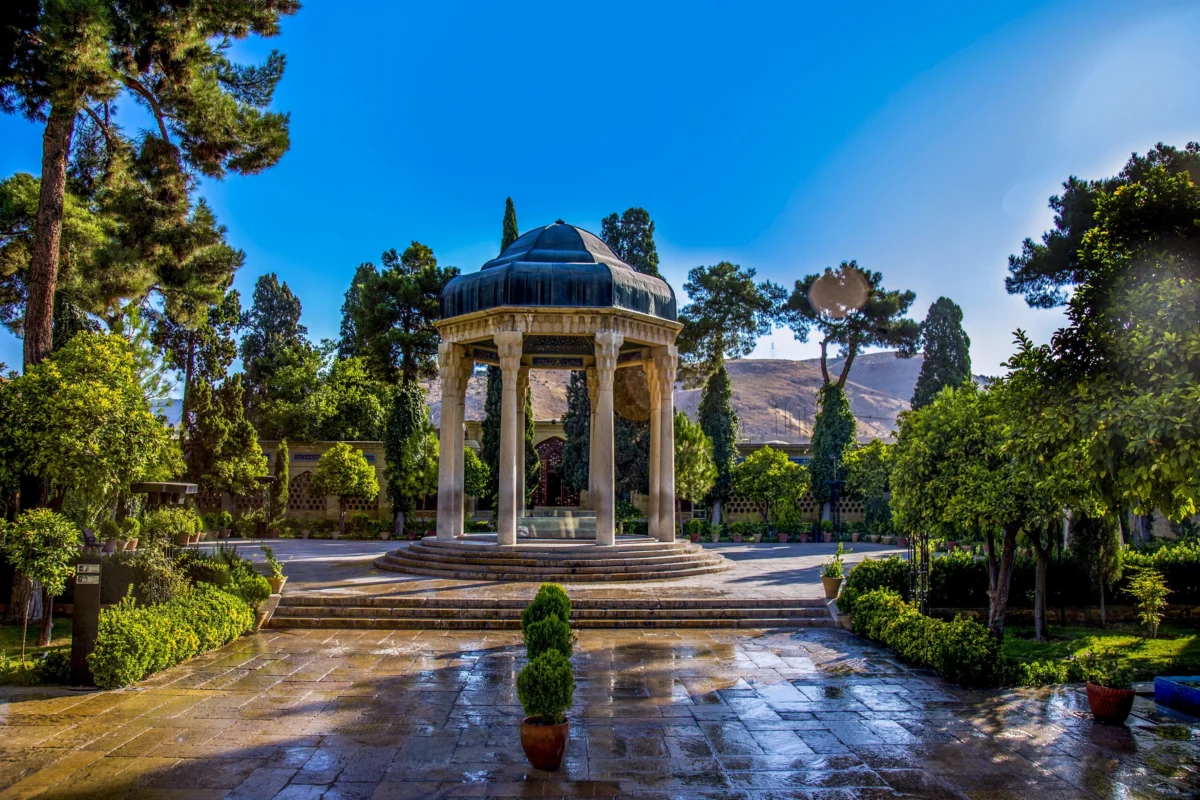
This is important when thinking about Yalda. The tradition is not simply about selecting a random page from an old book. It is about bringing a major part of Persian literary culture into a family gathering and allowing everyone to participate in it.
The poem may last only a few minutes, but the conversation around it can continue much longer.
From Persian Poetry to Contemporary Jewellery
Persian poetry has also influenced visual culture, including calligraphy and contemporary jewellery. The written word can become a design element in its own right, allowing a line, phrase or poetic reference to move from the page into something that can be worn.
This is particularly meaningful during Yalda because the celebration itself brings together poetry, symbolism and family memory. A piece inspired by Persian calligraphy does not need to reproduce an entire poem to carry that connection; sometimes a few carefully chosen forms are enough.
At ZAR Jewellery, this relationship between Persian heritage and contemporary design can be seen in pieces such as the Persian Poem Signet Ring, which uses Persian calligraphy as the central visual language. Another interpretation can be found in the Persian Poem Calligraphy Pendant, where the written form becomes a wearable expression of Persian literary heritage.
For someone who loves Persian poetry, this kind of jewellery can carry a more personal meaning than a conventional seasonal gift. It can serve as a quiet reminder of language, family, literature and cultural identity throughout the year.
You can also explore our article on Symbolism in Persian Jewellery Art to discover how Persian cultural ideas have been translated into jewellery and visual design.
How to Create Your Own Hafez Moment at Yalda
You do not need to organise a large celebration to include poetry in your Yalda evening. A copy of the Divan of Hafez, some comfortable seating and a little time away from phones and everyday distractions can be enough.
After dinner, place the book somewhere accessible and invite family members to take part. Someone can choose a question, open the book and read the poem aloud. If some family members do not understand Persian, reading a translation alongside the original can make the experience accessible without losing the sound and character of the Persian language.
Do not worry about finding the “correct” interpretation. Ask what particular images mean to different people, whether a line reminds anyone of another poem or memory, and why the selected words might feel relevant to the person who opened the book.
That conversation is often more important than the answer.
If children are taking part, this can also be a wonderful way to introduce them to Persian literature without making the experience feel like a lesson. Let them choose the book, listen to the poem and ask questions. Over time, these small experiences can become some of the memories they associate most strongly with Yalda.
Yalda, Poetry and the Return of Light
The deepest appeal of Yalda Night poetry may come from the way it complements the symbolism of the celebration itself.
Yalda takes place at the darkest point of the year, but the gathering is filled with warmth, conversation, food, music, stories and poetry. The darkness outside creates the setting, while the people inside create the atmosphere.
Hafez adds another layer to that experience. His poetry invites people to look beyond the obvious, to consider different meanings and to find beauty in language. Whether Fal-e Hafez is approached as an omen, a personal reflection or simply a beloved family custom, it encourages people to stop and listen.
That makes poetry more than an activity on the Yalda table. It becomes part of what the night represents: connection, memory, reflection and hope.
Keeping the Tradition Alive
Cultural traditions survive because people continue to make them relevant to their own lives. Yalda is no exception. Families have moved across countries, homes have changed, technology has transformed communication and younger generations often live very different lives from their grandparents.
Yet a book of Hafez can still be opened on a December evening.
Someone can still read a poem aloud. A family can still debate what it means. A child can still hear a Persian verse for the first time and perhaps remember it years later.
That is the strength of Yalda Night poetry. It does not require the past to remain unchanged. It simply gives the present a way to remain connected to it.
And perhaps that is why the tradition continues to feel so natural on the longest night of the year.
Frequently Asked Questions
Why is Hafez read on Yalda Night?
Hafez’s poetry has a long-standing place in Persian cultural life, and reading from his Divan has become a popular part of Yalda gatherings. The tradition of Fal-e Hafez combines poetry, reflection and interpretation, making it particularly suited to an evening spent with family.
What is Fal-e Hafez?
Fal-e Hafez is a Persian tradition in which the Divan of Hafez is opened to select a poem, often in connection with a question or personal thought. The selected poem is then interpreted as an omen, reflection or source of guidance.
Is Fal-e Hafez a form of fortune-telling?
Historically, Fal-e Hafez belongs to the broader tradition of bibliomancy and has a divinatory aspect. Today, however, people approach it in different ways, with some treating it as guidance and others enjoying it primarily as a literary and cultural tradition.
Who was Hafez?
Hafez was a celebrated Persian lyric poet who lived in Shiraz around the fourteenth century. His Divan is one of the most influential and widely recognised works of classical Persian poetry.
Why is poetry important in Persian culture?
Persian poetry has played a major role in Persian cultural and literary life for centuries. Poets such as Hafez, Rumi, Saadi and Ferdowsi have influenced literature, music, art, language and everyday cultural expression.
Can I include Hafez poetry in a modern Yalda celebration?
Absolutely. A simple way is to place a copy of the Divan of Hafez on the Yalda table and invite family members to read and discuss a poem. Reading the Persian original alongside an English translation can also make the tradition accessible to younger generations and non-Persian speakers.
Discover More Yalda & Persian Culture
If you are exploring the meaning behind Yalda, continue with our guides to What Is Yalda Night? History, Meaning and Traditions, Yalda Night Symbols: The Meaning Behind Pomegranates, Poetry and Light and Persian Yalda Food: Traditional Foods, Flavours and the Meaning Behind the Yalda Table.
For thoughtful Persian-inspired gifts, you can also explore Yalda Night Gift Ideas: Meaningful Persian Gifts.
When poetry becomes part of a family tradition, its meaning can last far beyond one evening. A poem can be remembered, repeated and eventually passed to another generation — just as a meaningful piece of Persian-inspired jewellery can carry a connection to heritage wherever life takes you.