

Blog
Yalda Night Symbols: The Meaning Behind Pomegranates, Poetry and Light

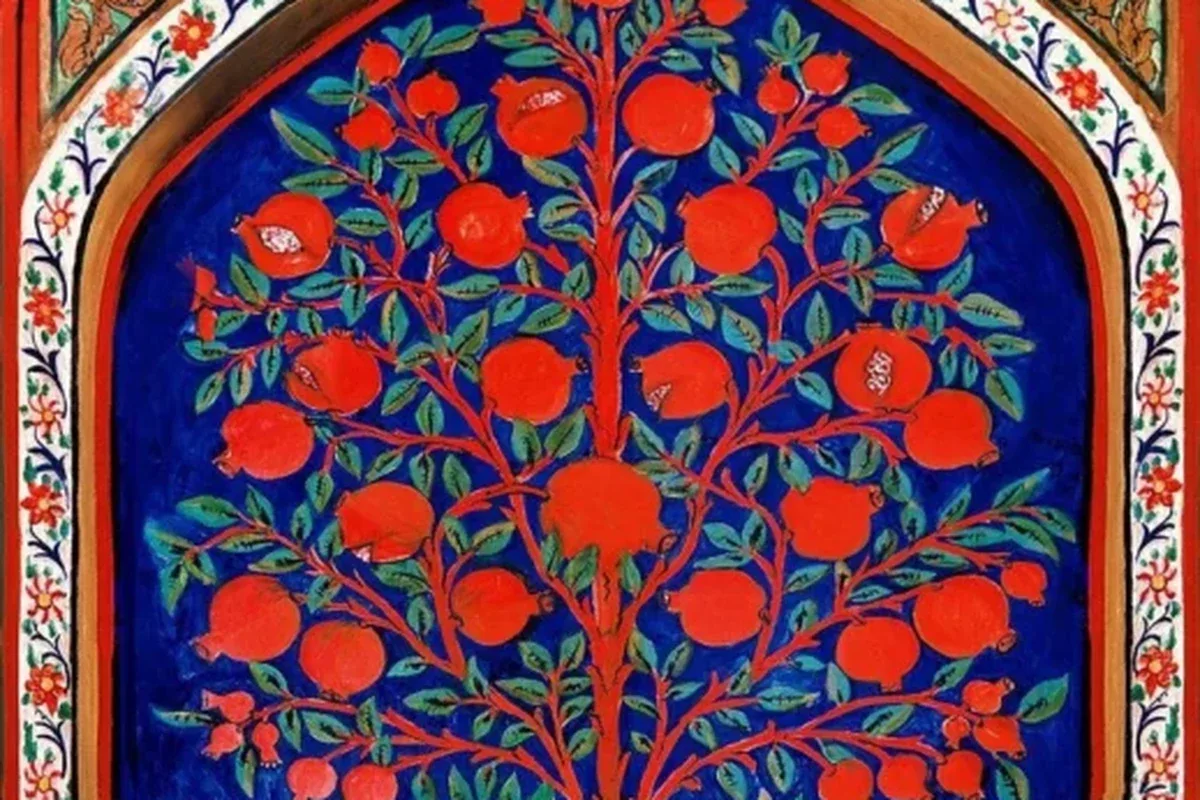
Yalda Night is filled with objects, foods and traditions that are beautiful on the surface but carry a deeper meaning. From the rich red colour of pomegranates to candlelight and the poetry of Hafez, the symbols associated with Yalda reflect ideas of warmth, life, hope and togetherness.
For generations, Persian families have gathered around the Yalda table to share food, conversation, poetry and stories. Today, these traditions continue both in Iran and among Persian communities around the world.
Table of Contents
What Do Yalda Night Symbols Mean?
Yalda is traditionally celebrated on the longest night of the year, marking the transition towards longer days and the gradual return of light. The celebration is known as Yaldā or Chella, and its traditions include family gatherings, special foods, poetry and storytelling.
The cultural importance of the celebration was formally recognised when Yaldā/Chella was inscribed on UNESCO’s Representative List of the Intangible Cultural Heritage of Humanity in 2022.
For a broader introduction to the celebration, you can also read our guide to What Is Yalda Night? History, Meaning & Traditions.
The meaning of individual symbols can vary between families and regions, but several have become strongly associated with Yalda.
The Pomegranate: A Symbol of Life and Abundance
Perhaps no fruit is more closely associated with Yalda than the pomegranate, or anar in Persian.
Its deep red colour connects naturally with warmth and vitality, while the many seeds inside the fruit have long made the pomegranate an important symbol of abundance and fertility in Persian culture. It has also become a familiar motif in Persian art, textiles, ceramics and jewellery.
The pomegranate’s distinctive shape makes it particularly well suited to jewellery design. A simple interpretation of its rounded form, crown-like top or seeds can create a contemporary piece while retaining a connection to Persian heritage.
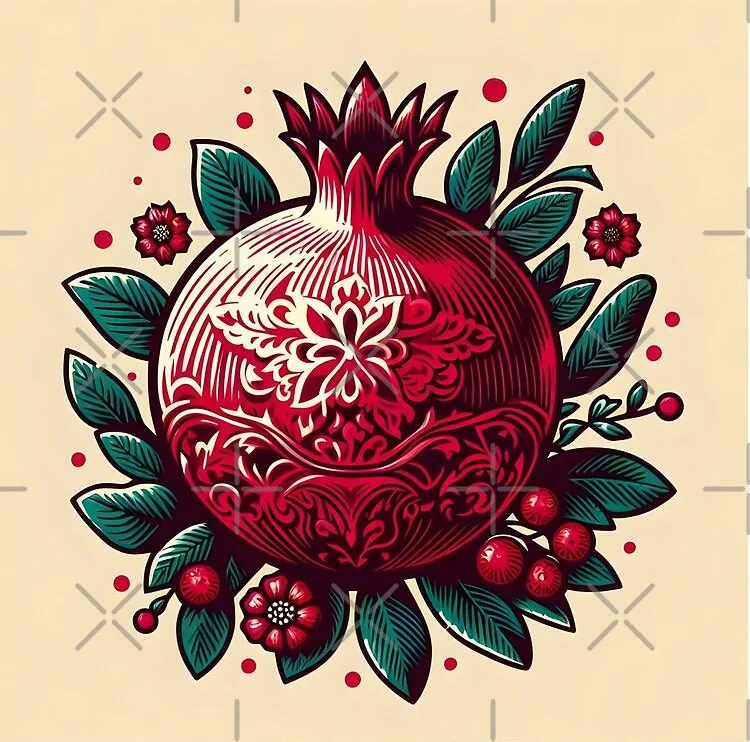
ZAR Jewellery’s Pomegranate Ring is one example of how this familiar cultural symbol can be translated into modern jewellery.
You can also explore Symbolism in Persian Jewellery Art to discover how traditional meanings are incorporated into contemporary Persian-inspired designs.
Watermelon and the Yalda Table
Watermelon is another familiar feature of the Yalda table. Its bright red interior and green exterior make it one of the most recognisable foods associated with the celebration.
There are different family traditions and explanations surrounding the food eaten on Yalda, and the exact customs can vary. What remains consistent is the importance of sharing these foods together as part of the evening.
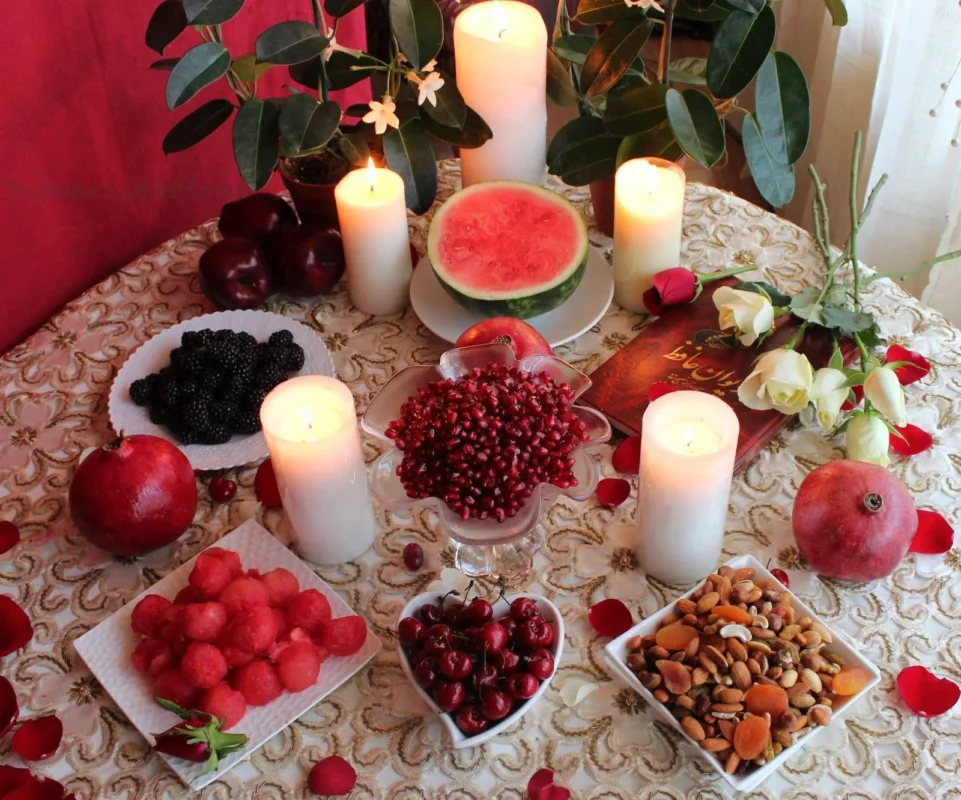
Alongside watermelon and pomegranates, Yalda tables may include nuts, dried fruits, sweets and other seasonal foods, creating a colourful setting for the family gathering.
Light and the Longest Night
Light has an especially powerful place in Yalda because the celebration takes place during the longest night of the year.
Candles and lamps are often used as part of the Yalda setting, symbolising light and warmth during darkness. The idea of moving from the longest night towards longer days gives the celebration an underlying sense of hope and renewal.
According to UNESCO’s description of Yaldā/Chella, lamps, candles and other elements of the celebration reflect the importance of light and warmth during this winter gathering.
This symbolism also explains why light remains such a natural theme in Persian-inspired art and jewellery. A design does not need to reproduce a traditional object literally to communicate ideas of brightness, hope or renewal.
Hafez and the Meaning of Poetry
For many Persian families, Yalda would not feel complete without poetry.
One of the best-known traditions is opening the poetry collection of Hafez and reading a poem aloud. This practice, known as Fal-e Hafez, involves interpreting a randomly selected poem as a source of reflection or guidance.
The tradition gives Yalda a more personal dimension. Family members may discuss the poem, interpret its meaning or simply enjoy hearing familiar Persian poetry together.
Poetry, storytelling and music are recognised as important elements of the wider Yaldā/Chella tradition.
The Sofreh Yalda
The Sofreh Yalda, or Yalda table, brings many of these symbols together.
Pomegranates, watermelon, nuts, dried fruit and other foods are arranged for the evening, often alongside candles, flowers and other decorative elements. More than simply a display, the table creates a shared space for eating, conversation and family traditions.
For Persian families living outside Iran, recreating the Yalda table can also be a way of maintaining a connection with Persian heritage and passing traditions on to younger generations.
Yalda Symbols in Modern Jewellery
One reason these symbols continue to inspire jewellery is that they can carry cultural meaning without looking old-fashioned.
A pomegranate-inspired ring can represent abundance, family or Persian heritage. A Persian-inspired motif can recall a cultural tradition without reproducing it literally, while jewellery influenced by Persian poetry can carry a more personal connection.
This relationship between cultural symbolism and contemporary design is at the heart of Persian-inspired jewellery. At ZAR Jewellery, traditional references are reinterpreted through modern designs intended to be worn and enjoyed today.
For those looking for a meaningful present connected to the celebration, our guide to Yalda Night gift ideas explores ways traditional Persian themes can be incorporated into thoughtful gifts.
The Meaning Behind Yalda
The most important Yalda Night symbols are ultimately about more than individual objects.
The pomegranate, watermelon, candlelight and poetry each contribute to a celebration centred around family, warmth, hope and the passing of traditions from one generation to the next.
That is perhaps why Yalda remains meaningful for Persian families around the world. The setting may change, but the central idea remains the same: gathering together on the longest night and celebrating the return of light.
Frequently Asked Questions
What is the most important symbol of Yalda Night?
The pomegranate is one of the most recognisable symbols of Yalda, representing themes such as warmth, abundance and life. Light, watermelon and poetry are also strongly associated with the celebration.
What does the pomegranate symbolise on Yalda?
The pomegranate is associated with warmth, abundance, fertility and life. Its rich red colour and numerous seeds have made it a particularly meaningful symbol in Persian culture.
Why do Persians eat watermelon on Yalda?
Watermelon is a traditional food found on many Yalda tables. It is associated with warmth and is traditionally eaten during the winter celebration, although the specific explanations and customs can vary between families.
Why is Hafez read on Yalda?
Reading Hafez is a popular Yalda tradition that combines poetry, reflection and family participation. A poem may be selected and interpreted as a form of Fal-e Hafez, or poetic omen.
What does light represent on Yalda Night?
Light represents warmth and hope during the longest night of the year. Lamps and candles are traditional elements of the Yalda setting, with UNESCO describing the lamp as a symbol of light.
Can Yalda symbols be used in modern jewellery?
Yes. Pomegranates, Persian motifs, calligraphy and nature-inspired forms can all be interpreted in contemporary jewellery. Using a symbol in a simplified design allows the cultural meaning to remain while creating something suitable for everyday wear.